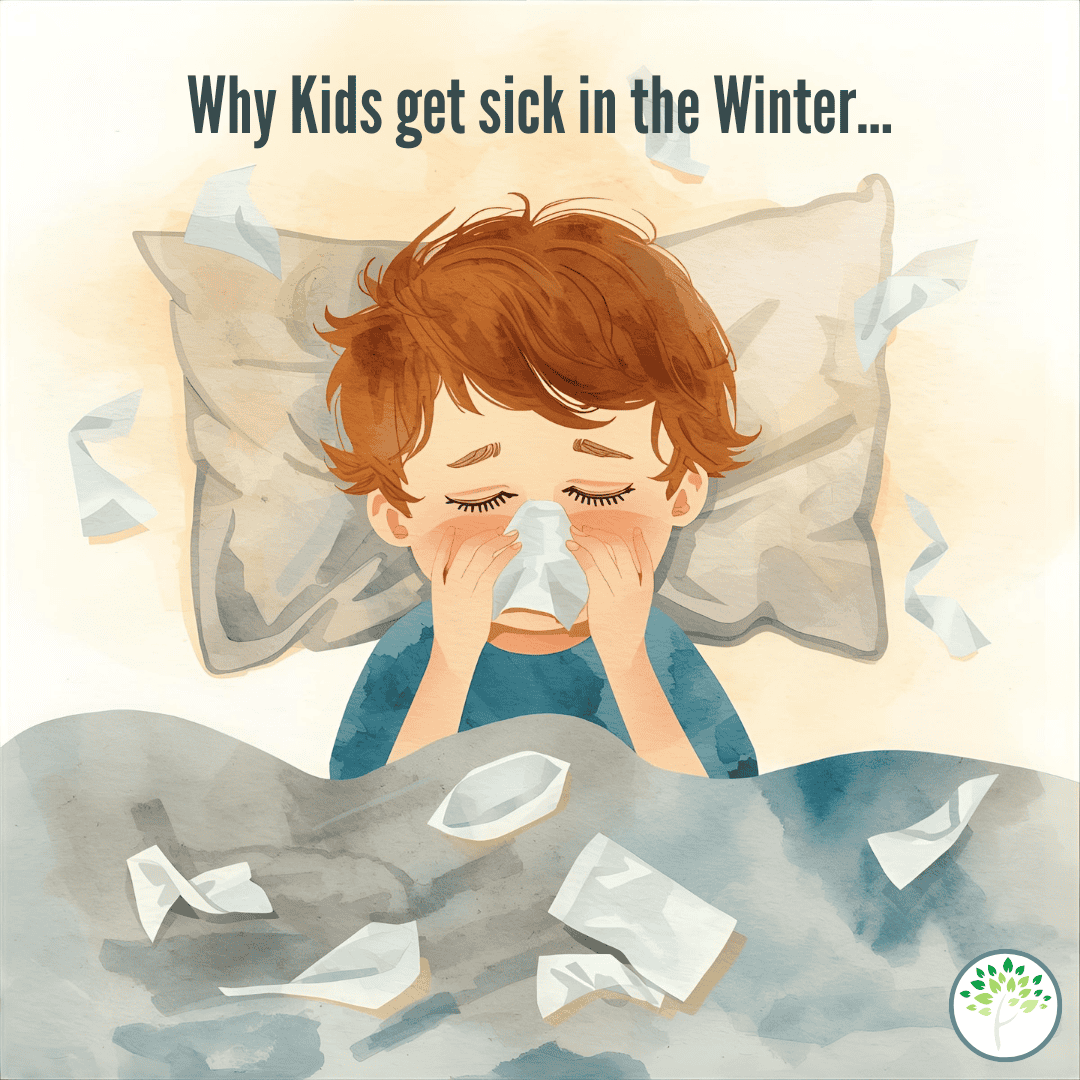
Every year around this time, parents ask me the same question:
“Why does my child get sick so much more in the winter … and what can I actually do about it?”
If you’ve ever felt like the cold months hit your family like a never-ending domino effect — one runny nose after another, fevers, coughs that linger for weeks — you’re not imagining it. And you’re not alone.
In fact, as a pediatric and family chiropractor, the winter season is when I hear the most frustration from moms and dads who feel like they’re doing “everything right” … yet their child still gets run down.
Let’s break down why this happens — and what you can realistically do to help your child stay resilient all season long.
1. Winter isn’t just “cold.” It’s a stress storm for kids.
This is the part most people never talk about.
Yes, winter brings colder temperatures and more time indoors. But the bigger issue is this:
Winter compresses multiple forms of stress onto a child’s nervous system at the same time.
Here’s what kids are hit with:
- Less sunlight: lower vitamin D, circadian rhythm shifts
- More indoor time: dry air, more germs sharing the same air space
- Holiday routines: late nights, sugar, irregular schedules
- School pressure: winter is when attention issues, anxiety, and fatigue peak
- Bigger emotional swings: kids “hold it together” in school and crash at home
When you stack these stressors, you get what I call:
A dysregulated nervous system that can’t defend itself as well.
This is why some kids get sick repeatedly, while others bounce back quickly.
I see this every day on Insight scans — especially HRV (Heart Rate Variability). Kids with low or unstable HRV almost always struggle more during these months.
2. “But my child is active and eats well … why still sick?”
This is the question I hear from parents the most.
Let me share a small example (no names, of course):
A 7-year-old boy came into the office last December.
His mom said, “He’s genuinely healthy … but every winter he gets sick over and over. What’s missing?”
We looked at his scans.
- His sEMG scan showed that his spine was working way harder than it should be.
- His Thermography showed irritation around the upper neck.
- His HRV showed that his body was stuck in fight-or-flight instead of rest-and-heal.
He wasn’t unhealthy …
He was overwhelmed.
His nervous system simply didn’t have enough capacity left to fight off the everyday winter bugs.
After a few weeks of gentle pediatric adjustments:
- He slept better
- His meltdowns decreased
- His immune responses improved
- And that repeat cycle of colds finally broke
This is the part moms are never told:
Healthy habits matter — but a stressed-out nervous system cancels out even the best healthy habits.
3. The neurological reason kids get sick more in the winter
Here’s where things get interesting.
When a child’s nervous system is stressed — whether from sports, posture, school, sugar, screens, or emotional overwhelm — the spine often tightens and locks into a “defensive” pattern.
Chiropractors call this subluxation, but what it really means is:
The nervous system gets stuck in survival mode.
And when this happens …
- Digestion slows
- Sleep is lighter
- Inflammation rises
- Immune function takes a hit
- Hormone balance shifts
- The vagus nerve becomes less effective
- The body becomes more reactive to germs it normally would handle easily
So winter isn’t just “more germs.”
It’s more stress, which means lower resilience, which means kids get sicker and stay sick longer.
4. The part most doctors miss: Regulation > Avoidance
A lot of advice out there focuses on avoiding germs.
But the truth is:
You can’t avoid germs. You CAN improve how your child responds to them.
That’s the entire difference between:
- A kid who gets sick constantly
- VS.
- A kid who catches something, deals with it, and bounces back quickly
The real goal is to strengthen the regulation of their nervous system — not just “avoid!” and “sanitize!”
That’s where chiropractic shines.
5. What parents can actually do (that works)
Here are the simple, powerful steps I recommend in the office every winter:
1. Restore the nervous system’s ability to adapt
Gentle pediatric chiropractic adjustments help:
- Reduce tension patterns
- Improve vagus nerve tone
- Balance the fight-or-flight system
- Boost immune coordination
- Improve sleep quality
- Enhance HRV and resilience
This is the foundation.
Everything else stacks on top.
2. Prioritize winter-season sleep
A child who sleeps deeply heals deeply. Winter schedules can get chaotic — protect bedtime as much as possible. Even 30 minutes earlier can change a child’s entire immune response.
3. Hydrate more than you think you need to
Dry indoor air = dry mucous membranes = lowered defense. Most kids are already under-hydrated before winter even begins. Add electrolytes if needed.
4. Increase real whole foods (especially fats)
Healthy fats support hormone balance and help the immune system regulate inflammation. Winter is not the season to under-eat or low-fat diet your kids.
5. Let them move their bodies daily
Movement is regulation.
Movement triggers better lymphatic flow. Movement improves mood and immune function.
Even inside — bear crawls, jumping jacks, hallway soccer … it all counts.
6. Don’t ignore early signs of overload
Parents often miss the first red flags:
- Crankiness
- Trouble falling asleep
- Bigger emotional reactions
- School avoidance
- Tummy aches
- Sensory overwhelm
- Night sweats
These are nervous system distress signals.
The sooner you support them, the faster they recover.
6. The biggest truth parents need this winter
Kids don’t get sick more in the winter because they’re weak.
They get sick more because winter adds stress faster than they can keep up with.
Your child’s immune system isn’t separate from their nervous system — they work as one.
And when you support the nervous system, the immune system follows.
If your child has been stuck in the cycle of repeated winter sickness …
Recurring colds, stubborn congestion, chronic coughs, ear issues, sleep crashes — these are signs of overload, not “bad luck.”
If you want answers, clarity, and a real plan:
Start with a full Insight scan to see how their nervous system is adapting.
It’s gentle, safe for all ages, and gives us a real window into what’s going on under the surface.
When we can see the stress patterns, we can help your child move out of the cycle — and step into winter with more resilience than ever.
If you’d like to schedule a scan or talk through your child’s symptoms, we’re here.