
Services
INSIGHT™ Neurological Scans
We Don’t Guess. We Measure.
Most of the time you’re given a label that describes your child’s symptoms, not WHY the symptoms exist. Our neurological scans show you what’s actually happening inside their nervous system — in about fifteen minutes, with no radiation, no needles, and no discomfort..
Same-week appointments available. Safe for newborns through adults.
Services
INSIGHT™
Neurological Scans
If you’re reading this page, there’s a good chance you’ve already been down a long road.
Maybe your baby cries for hours and nobody can tell you why. Maybe your toddler melts down over things that shouldn’t be a big deal. Maybe your school-aged child can’t sit still, can’t fall asleep, or can’t seem to settle no matter how calm you make the house. And maybe you’ve heard some version of “everything looks normal” more times than you can count.
Here’s the thing about “normal.” Standard testing — bloodwork, imaging, a well-child checkup — is very good at spotting disease. It’s designed to answer one question: is something broken? When the answer is no, the appointment ends. But that leaves a second question completely unasked: is everything actually working the way it should?
That’s the question we’re built to answer.
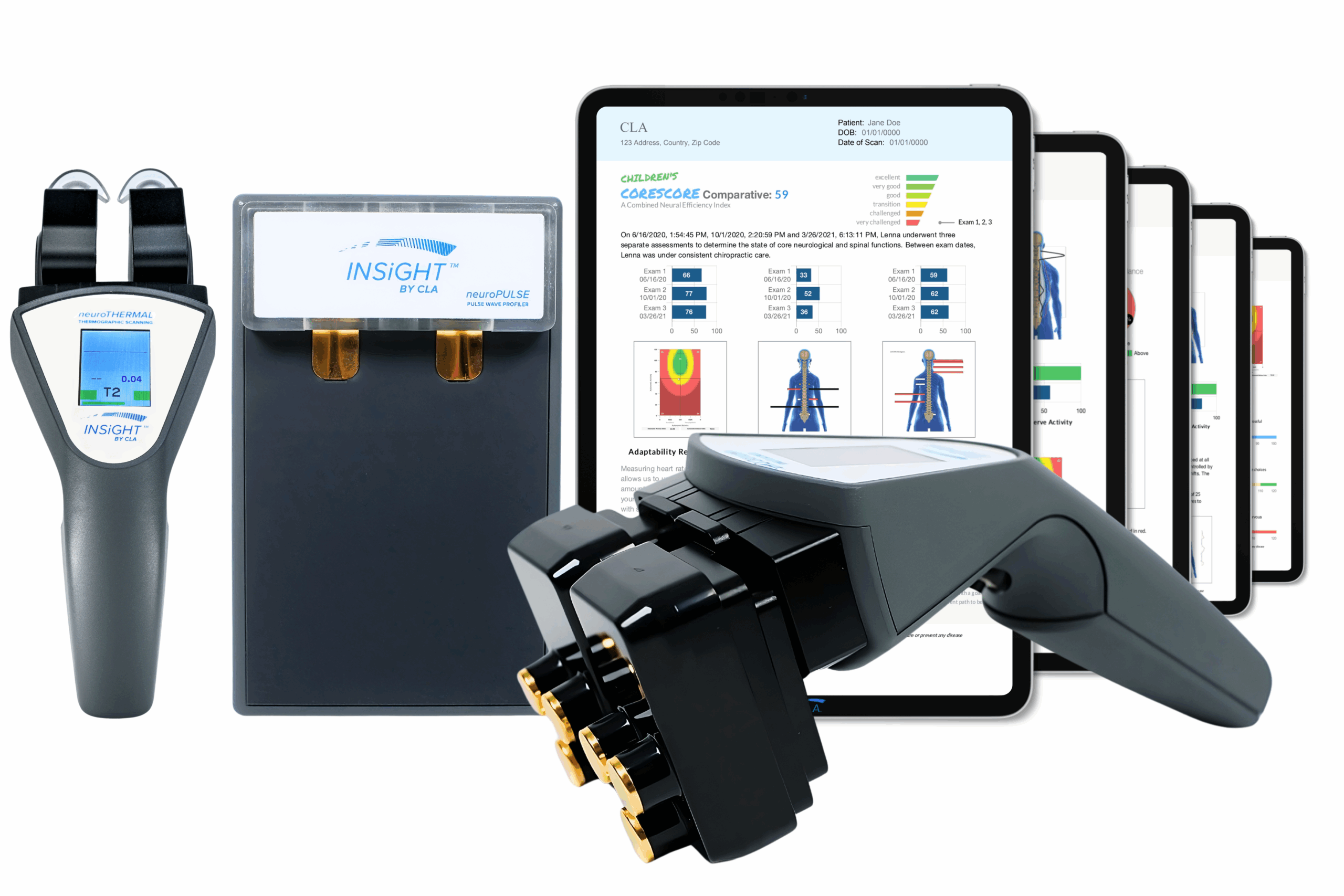
At Vital Wellness Center, we use a set of three non-invasive neurological scans to measure how your child’s nervous system is functioning — how much stress it’s holding, how well it’s coordinating, and how much reserve it has left. It’s simple, it’s fast, and for a lot of families it’s the first time anyone has handed them a real picture instead of a shrug.
Start With the System That Runs Everything Else
Your child’s nervous system is the control center for the entire body. Every heartbeat, every breath, every digestion cycle, every immune response, every emotion, every motor skill — all of it is coordinated by the brain, brainstem, and spinal cord.
Think of it as air traffic control. When the tower is calm and organized, flights land on time. When the tower is overwhelmed, it doesn’t matter how good the individual planes are — everything backs up.
This is why so many families end up chasing symptoms in circles. You work on gut health. You work on sleep. You work on behavior. You add therapy for motor skills and another for speech. Each of those things can genuinely help — and we’re glad when they do. But if the system coordinating all of them is stuck in overdrive, you’re constantly managing downstream effects instead of addressing what’s upstream.
A large part of the nervous system runs autonomically — automatically, without you thinking about it. And the clearest window into how well it’s doing that job is to watch the four things a healthy child’s body is supposed to handle without effort:
- Eating — nursing, latching, digesting, keeping food down
- Sleeping — falling asleep, staying asleep, waking rested
- Pooping — regular, comfortable, predictable
- Moving — hitting motor milestones, developing coordination, regulating tone
When one or more of those is a daily struggle, that’s information. Our scans let us take that information and put actual numbers behind it.
How It Works
Three Scans. Fifteen Minutes. Zero Discomfort.
The nervous system is a two-way street.
Sensory nerves carry information in — reporting to the brain what’s happening inside the body and out in the world. Motor nerves carry instructions out — telling muscles, organs, and glands what to do and when to do it.
That conversation happens constantly, across trillions of cells, at extraordinary speed. When it’s clear, the body self-regulates beautifully. When there’s interference in that signal, the effects show up everywhere — digestion, sleep, immunity, focus, emotional regulation, coordination.
Our scans measure that conversation directly. All three are:
- Non-invasive — nothing enters the body
- Radiation-free — no X-rays, no imaging
- Painless — most kids think it’s a game
- Fast — the full set takes about fifteen minutes
- Safe at any age — we scan newborns, toddlers, teenagers, and parents
And here’s what makes them genuinely useful: because they’re quick and repeatable, we can rescan over the course of care and show you objective change — not just “he seems calmer lately,” but a measurable shift you can see side by side.
A note on timing: A child’s brain roughly doubles in size during the first year of life and keeps developing at a remarkable pace through the early childhood years. That’s a narrow window and an incredibly responsive one. It’s a big part of why we don’t wait for symptoms to get worse before we look.
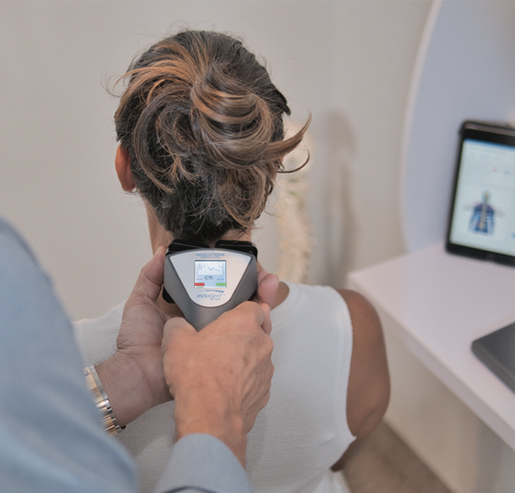
Scan One: Thermal — Reading the Autonomic System
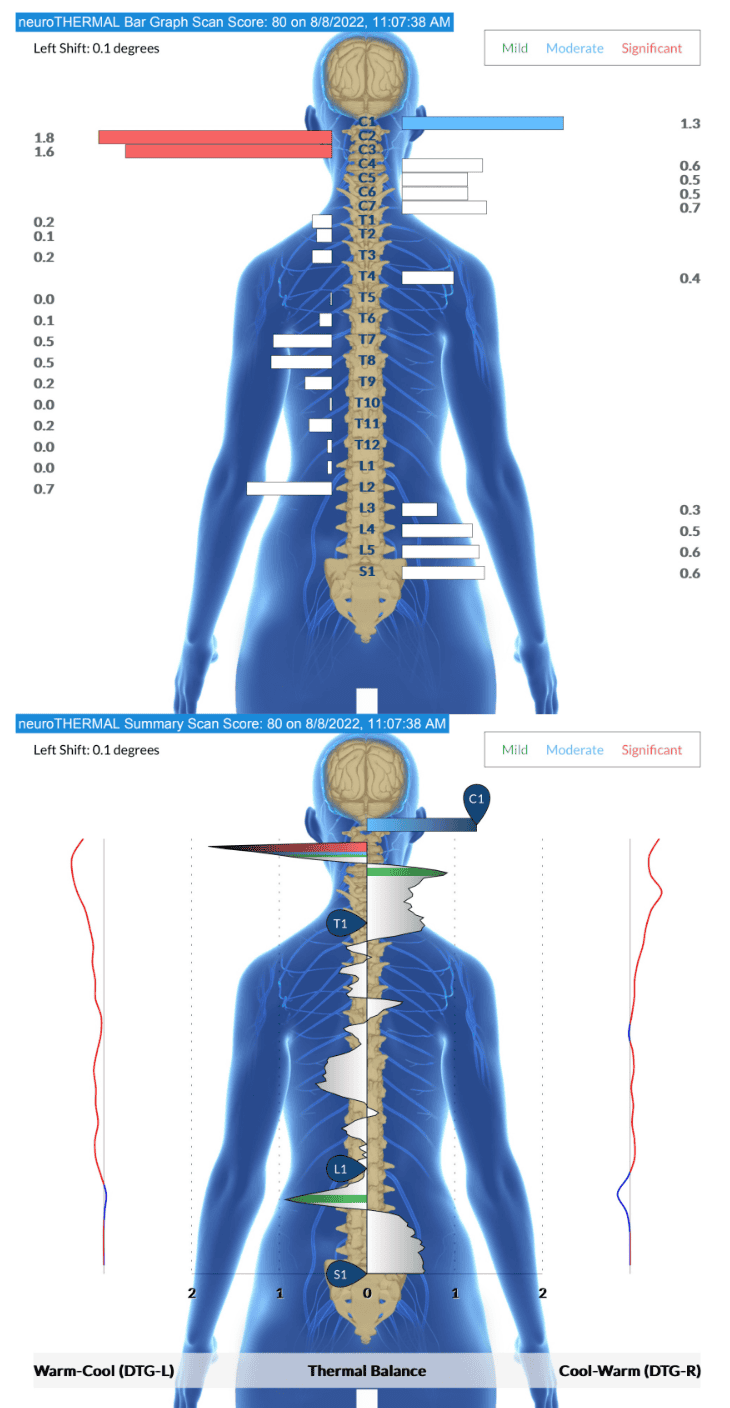
What it measures: Temperature differences along both sides of the spine.
Why that matters: The nerves that regulate your organs also regulate blood flow to the skin. When we run a small sensor along the spine, temperature asymmetries tell us where the autonomic nervous system is under strain — and roughly which body systems are being affected.
Because the autonomic system governs digestion, immune response, and hormone regulation, this is the scan we lean on most heavily for families dealing with:
- Colic, reflux, and feeding difficulties in infants
- Chronic constipation or digestive trouble
- Recurring ear infections and frequent illness
- Seasonal and environmental sensitivities
- Trouble falling asleep or staying asleep
What it feels like: A small sensor gliding down the back. It takes under a minute. Babies usually sleep through it.
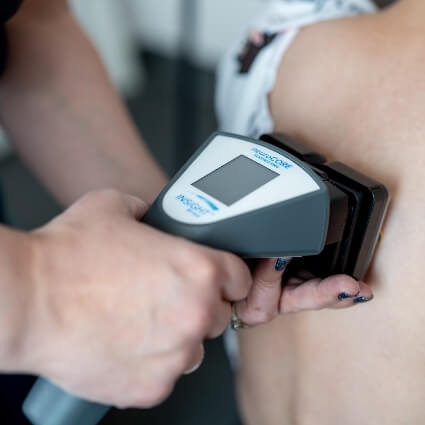
Scan Two — Muscle Activity
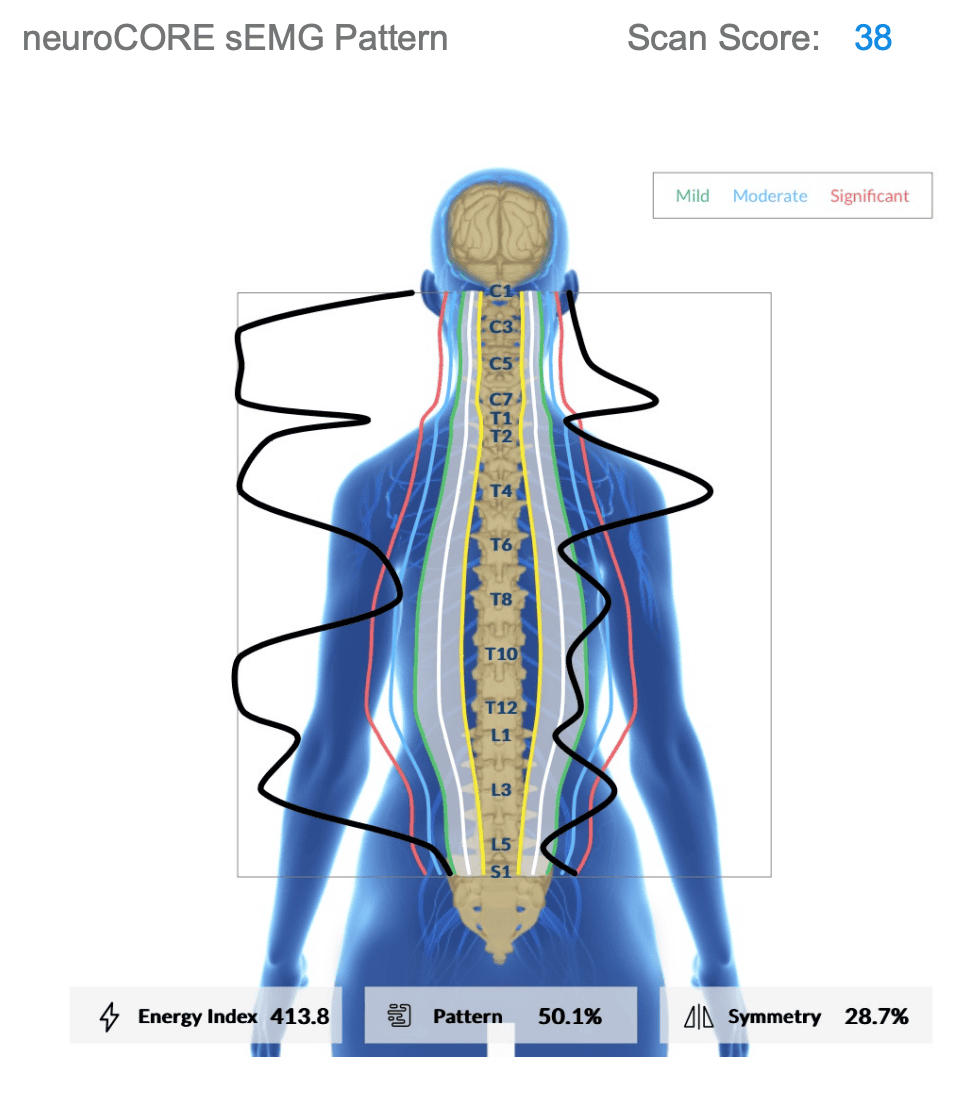
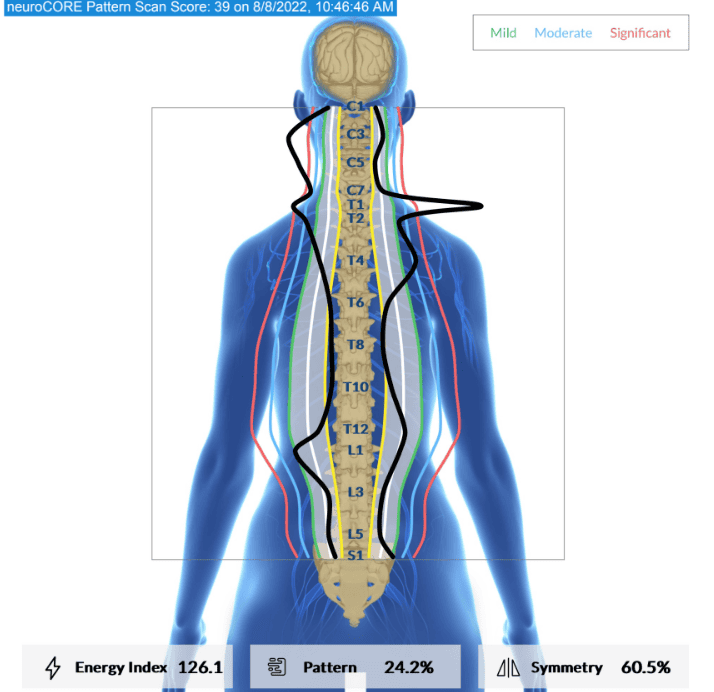
What it measures: The electrical activity in the muscles alongside the spine.
Why that matters: Muscles don’t hold tension at random. They hold it because the nervous system is telling them to. When we measure that activity, we’re really measuring how much energy the system is burning just to hold your child upright and how evenly that effort is distributed.
We look at three things:
Total energy — how much the system is spending overall. A high number means the body is running hot, working far harder at rest than it should. In kids, that often tracks alongside difficulty winding down, restlessness, trouble sleeping, and a short fuse.
Pattern — whether tension is organized or scattered. Disorganized patterns frequently show up in children working through sensory processing, emotional regulation, focus, core strength, and postural endurance.
Symmetry — how balanced the left and right sides are. Meaningful asymmetry can point toward coordination and developmental challenges, and it’s often one of the earliest measurable signs that something is off.
This scan is particularly valuable for families whose children are already working with physical, occupational, or speech therapists. Those professionals do outstanding work on tone and motor function — and this scan gives everyone a look at the neurological side of the same picture.
What it feels like: Nothing. A handheld sensor touches the back at several points along the spine. Kids are usually surprised it’s over so quickly.
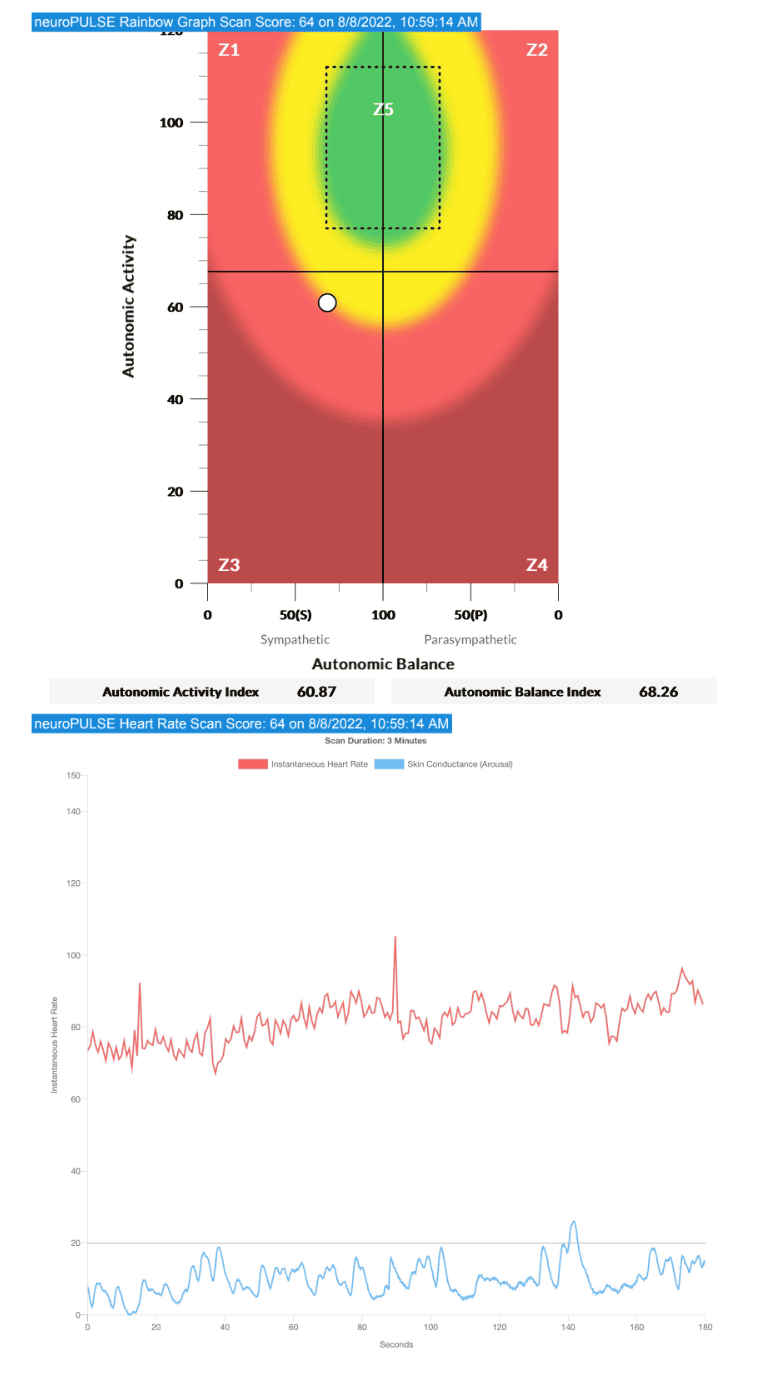
Scan Three — HRV
What it measures: The electrical activity in the muscles alongside the spine.
Why that matters: Muscles don’t hold tension at random. They hold it because the nervous system is telling them to. When we measure that activity, we’re really measuring how much energy the system is burning just to hold your child upright and how evenly that effort is distributed.
We look at three things:
Total energy — how much the system is spending overall. A high number means the body is running hot, working far harder at rest than it should. In kids, that often tracks alongside difficulty winding down, restlessness, trouble sleeping, and a short fuse.
Pattern — whether tension is organized or scattered. Disorganized patterns frequently show up in children working through sensory processing, emotional regulation, focus, core strength, and postural endurance.
Symmetry — how balanced the left and right sides are. Meaningful asymmetry can point toward coordination and developmental challenges, and it’s often one of the earliest measurable signs that something is off.
This scan is particularly valuable for families whose children are already working with physical, occupational, or speech therapists. Those professionals do outstanding work on tone and motor function — and this scan gives everyone a look at the neurological side of the same picture.
What it feels like: Nothing. A handheld sensor touches the back at several points along the spine. Kids are usually surprised it’s over so quickly.
Putting It Together
One Picture, Not Three Puzzle Pieces
Any one of these scans is useful. Together, they’re something different.
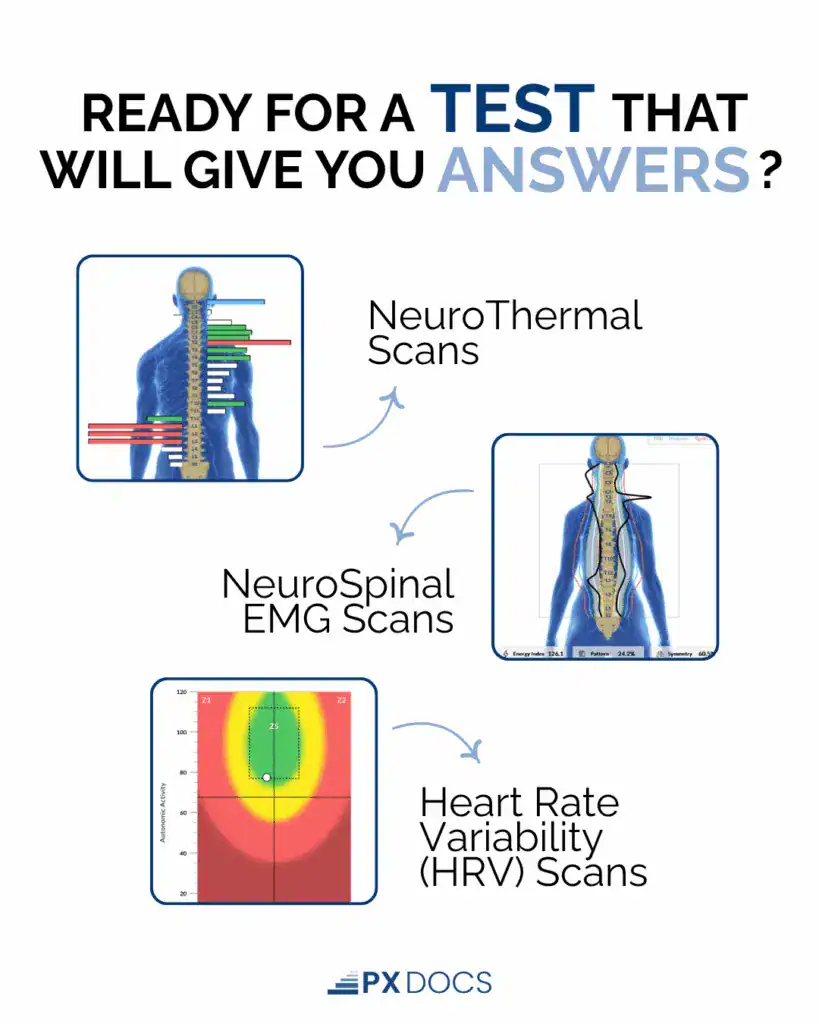
Thermal shows us what the autonomic system is doing. EMG shows us what the body is holding. HRV shows us how much capacity is left. Layer them, and patterns emerge that no single test would reveal — the why behind symptoms that have looked unrelated and unexplainable for years.
We’ve also found something worth naming: the underlying patterns we see in a colicky six-week-old often look strikingly similar to what we see in a nine-year-old struggling to focus in class. The labels change with age. The system underneath frequently doesn’t.
Which is why we’re not especially interested in the label your child arrived with. We’re interested in the system.
What to Expect
Your First Visit
Step one — We listen. Before any technology comes out, we want the whole story. Pregnancy and birth. Feeding and sleep. What you’ve already tried. What you’re most worried about. What a good day looks like versus a hard one. Bring your notes, your questions, and your records.
Step two — We scan. All three scans, about fifteen minutes, in a space set up for actual children with actual energy levels.
Your Second Visit
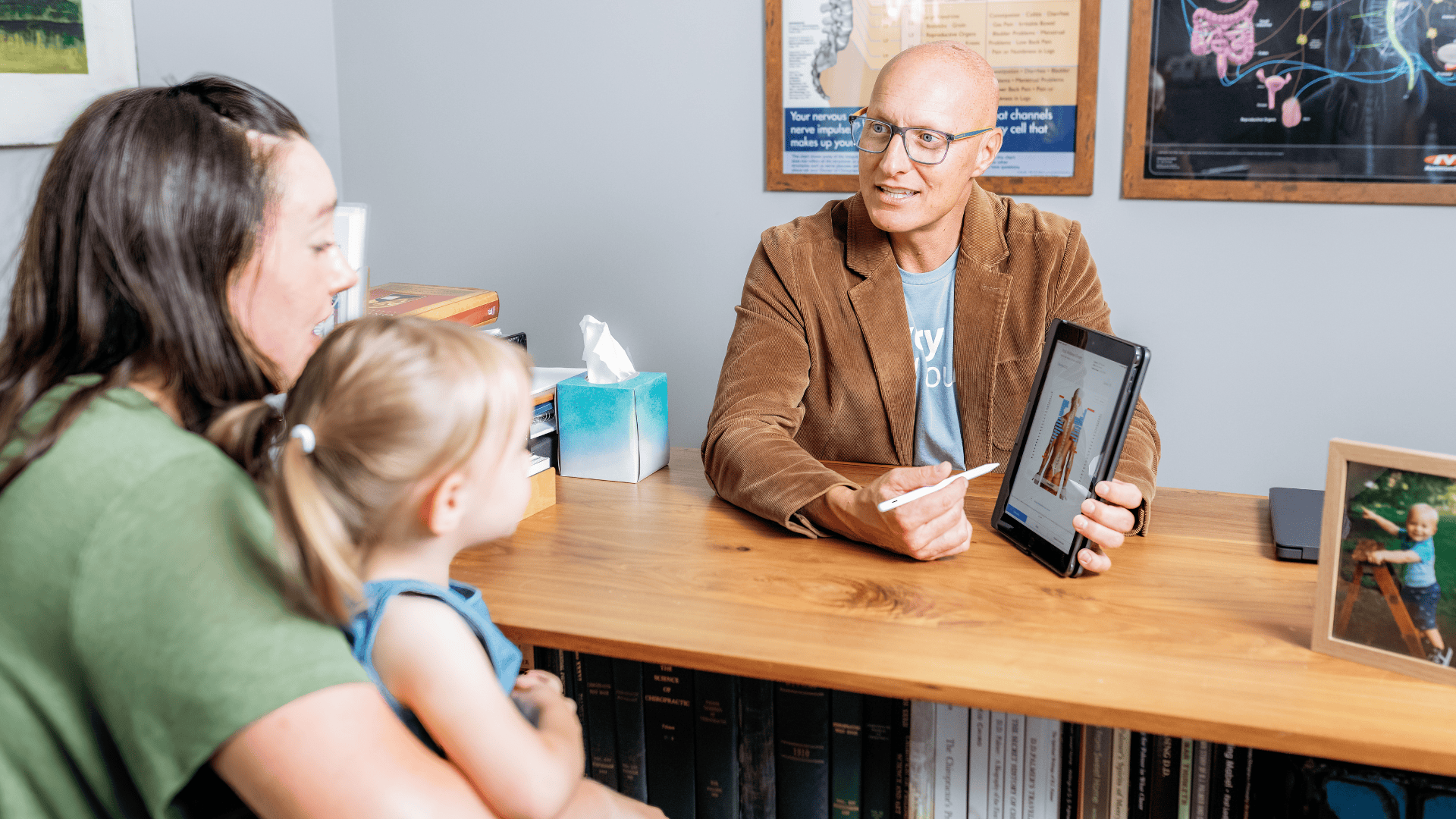
Step one — We explain. You’ll sit down with your doctor and go through your child’s results together, in plain language, with the images in front of you. You’ll see what we found, what it means, and where the priorities are. No jargon wall. No rushing.
Step two — You decide. If we believe we can help, we’ll lay out a specific recommendation with a timeline and a cost. If we don’t think we’re the right fit, we’ll tell you that directly and point you toward who might be. Either way, you leave with clarity — and that has value whether or not you become a patient here.
Frequently Asked Questions
Are the scans safe for babies?
Yes. There’s no radiation and nothing enters the body. We regularly scan infants in their first days of life. Most sleep right through it.
Does it hurt?
No. The scans use surface sensors that rest against the skin. Nothing is inserted, injected, or forced. Kids who are nervous about doctor’s offices are usually relieved by how uneventful it is.
How long does it take?
Roughly fifteen minutes for all three scans. Your full first visit, including consultation and results review, takes about an hour.
My child can't sit still. Is that a problem?
It’s genuinely not. We scan wiggly kids every single day and our team is practiced at it. Please don’t let this be the reason you don’t come in.
Do I need a referral?
No.
Is this covered by insurance?
Coverage varies. Contact our office at (630) 365-9887 and we’ll help you understand your options before you commit to anything.
Can adults get scanned?
Absolutely — and parents often do. Many find their own results explain a great deal about how they’ve been feeling.
Are the scans safe for babies?
Yes. There’s no radiation and nothing enters the body. We regularly scan infants in their first days of life. Most sleep right through it.
How do we know if it's working?
We rescan. That’s one of the biggest advantages of this technology: progress is measurable, not just anecdotal. You’ll see your child’s scans side by side over the course of care.
You've Been Told to Wait Long Enough
If you’ve been carrying a worry that nobody has taken seriously, or you’ve been told to wait and see one time too many, we’d like to take a look.
Fifteen minutes. No radiation, no needles, no pressure. Just a clear, honest picture of how your child’s nervous system is functioning — and a straight conversation about what to do next.
Come See Us!
Request a New Appointment
Testimonials