What Are Neurological Scans and Why Use Them?
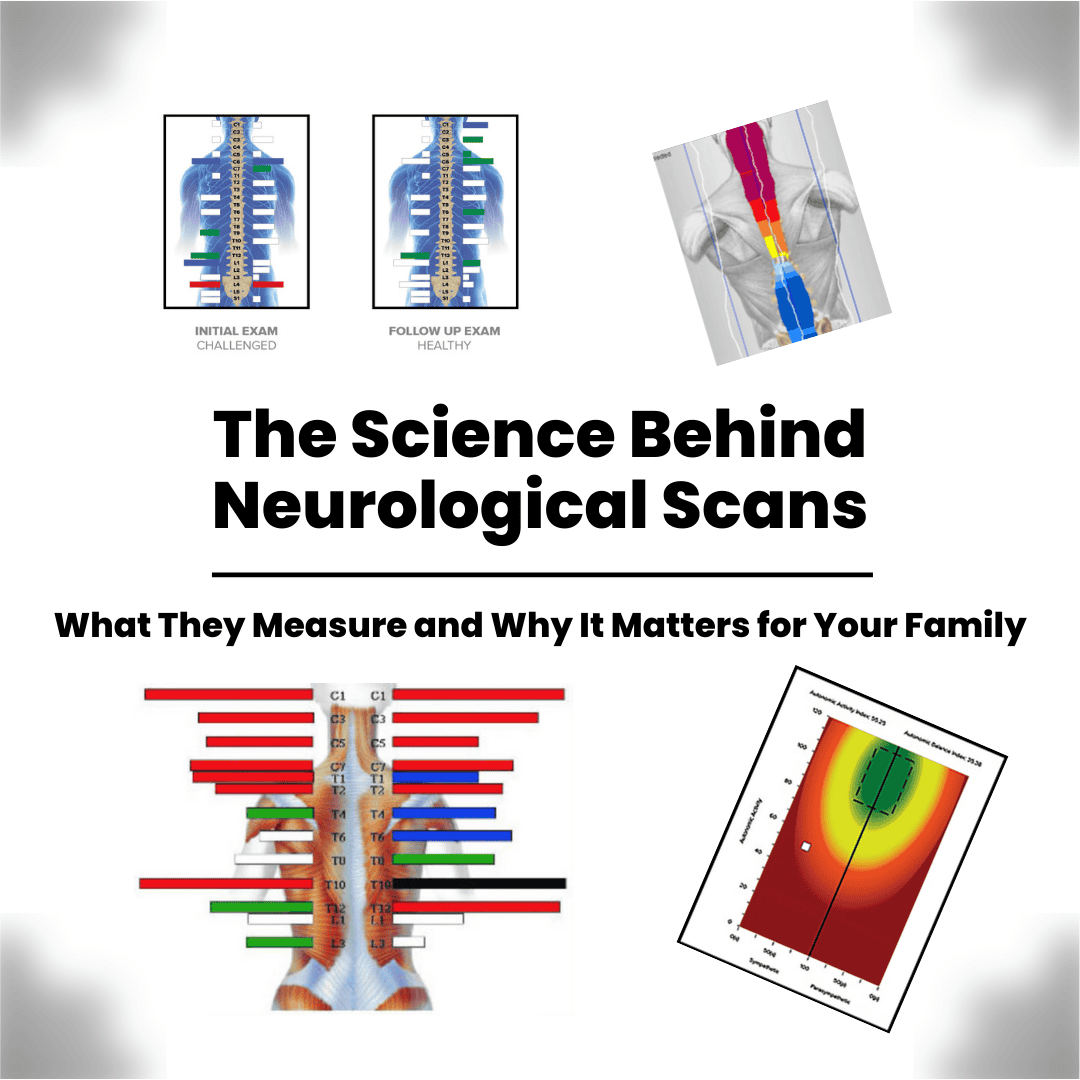
Neurological scans are a set of high-tech tests that measure key aspects of nervous system function. In our practice at Vital Wellness Center, we utilize the INSIGHT™ scanning system, which combines three core scans: Heart Rate Variability (HRV), Thermography, and Surface Electromyography (sEMG). Each scan looks at a different facet of how your nervous system is working:
- HRV scan: Measures your heart rate variability to assess autonomic nervous system balance and adaptability. Think of this as checking how well your body can handle stress and switch between “fight-or-flight” and “rest-and-recover” modes.
- Thermography: Uses an infrared thermal scanner along your spine to detect temperature differences, which reflect imbalances in autonomic nerve regulation of organs and glands. It’s like a heat map of your spine that can reveal where stress or inflammation might be affecting nerve function.
- Surface EMG: Places sensors along your back to measure tiny electrical signals in your postural muscles, showing areas of tension or fatigue. This scan indicates how efficiently your motor nerves are controlling muscle activity along the spine.
All three scans are safe for all ages—from infants to adults. There are no needles (the EMG electrodes simply stick on the skin), no radiation, and no discomfort. In fact, even newborns can be assessed with these scans (the HRV scan uses a gentle finger or ear clip sensor). It only takes a few minutes, but the insights are profound. By combining the results, we get a comprehensive view of your nervous system’s status. It’s essentially a report card for your neurological health, highlighting patterns of stress or dysfunction that might otherwise go unnoticed.
A chiropractor uses an INSIGHT™ scanning device at the base of a patient’s neck. These neurological scans are non-invasive and provide objective data on nervous system function, allowing for personalized, precise care based on what’s actually happening inside the body.
Heart Rate Variability (HRV) Scan – A Window into Stress & Resilience
Heart Rate Variability, or HRV, is a fascinating measure of how adaptable and resilient your nervous system is. An HRV scan involves using sensors to measure the slight variations in time between each heartbeat. Why measure this? These tiny variations are controlled by your autonomic nervous system (ANS), which manages your body’s unconscious functions like heart rate, breathing, and digestion. When you’re relaxed, your heartbeats naturally vary a bit more; under stress, the time between beats becomes more uniform. In other words, high HRV generally indicates a balanced, flexible nervous system, whereas low HRV can signal that your body is stuck in “fight or flight” mode.
Research has shown that HRV is a reliable, noninvasive indicator of autonomic nervous system balance. If the system is tilted toward stress (sympathetic dominance), the variation between heartbeats tends to be lower; if the system is more relaxed (parasympathetic activity), the variation is higher. People with higher HRV often have better cardiovascular fitness and greater stress resilience.
In our office, the HRV scan helps us quantify your body’s stress level and adaptive capacity. For example, a parent dealing with chronic work stress might show a low HRV score, meaning their nervous system is not recovering well. A child with anxiety or sensory challenges might also have a strained HRV pattern, reflecting an overwhelmed nervous system.
The beauty of the HRV scan is that it gives an immediate snapshot of your stress response. It answers questions like: Is your body stuck in overdrive? Do you have enough reserve to handle daily challenges? Over time, as you incorporate healthy habits or chiropractic adjustments, you may see your HRV improve.
Thermography – Mapping Autonomic Imbalances Along the Spine
Thermography uses a sensitive thermal sensor to measure skin temperature on both sides of the spine. Why temperature? Because your skin temperature is regulated by autonomic control of blood flow. In a balanced state, the temperature should be fairly equal on both sides. A significant difference is a red flag indicating stress or irritation in the nerves at that level.
Thermography can uncover hidden dysautonomia. For example:
- A child with digestive issues may show heat imbalance in the mid-back region.
- A parent with thyroid or sinus concerns may show asymmetry in the neck area.
Thermography is painless—nothing is emitted; it simply reads your body’s heat. The data helps pinpoint specific segments of autonomic stress. Over time, as stress decreases, thermal patterns typically normalize.
Parents often appreciate seeing these scans because they visually validate progress—like an upper-neck imbalance resolving after chronic ear infections improve.
Surface EMG – Revealing Muscle Tension and Nerve Activity
Surface EMG measures tiny electrical currents in the muscles that support your spine. Think of it as an EKG for spinal muscles. When nerve signals are disturbed—due to misalignment, stress, or injury—muscles can become overly tense, fatigued, or asymmetrical.
An sEMG scan uses small sensors placed along the back. In seconds, it produces a bar-graph reading of muscle energy from neck to low back.
Abnormal readings may show:
- One side working harder than the other
- Excessive tension
- Weak or underactive muscles
These patterns often appear before symptoms do.
SEMG is especially helpful for identifying early stress patterns in kids and adults—like a teenager with neck tension from gaming or a parent with shoulder tightness from desk work.
Results are displayed in easy-to-read color graphs. Over time, improvements show as shorter bars and more symmetry.
Beyond Symptoms: The Power of Objective Data in Care
Neurological scans provide objective data—unlike symptom-based care, which can miss early dysfunction. Scans reveal what’s happening inside the nervous system even when symptoms are absent.
They help:
- Identify stress before it becomes a problem
- Pinpoint root causes
- Track progress with measurable data
This clarity empowers families to make informed decisions and stay motivated through care.
Pediatric Development: Catching Imbalances Early
Children’s nervous systems are rapidly developing. Early detection is crucial.
Examples:
- A colicky infant may show sympathetic overdrive and upper-neck tension.
- A “healthy” 7-year-old may show mid-back tension from backpacks or falls.
- A child with focus challenges may show sympathetic dominance.
Case Example – Emma, Age 4:
Chronic ear infections and poor sleep.
Thermography showed upper-neck imbalance; HRV showed low adaptability.
After gentle adjustments, her scans normalized and symptoms improved.
Adult Stress & Family Wellness Planning
Adults often normalize stress symptoms. Scans can validate what’s happening internally.
Common findings:
- Low HRV (chronic stress)
- Thermal imbalances (adrenal or sinus patterns)
- sEMG tension (desk posture, screen time)
These insights guide personalized wellness plans.
Case Example – Michael, Age 38:
Neck stiffness, fatigue, irritability.
Scans showed low HRV, neck/shoulder tension, mid-back imbalance.
After care, his HRV improved, tension decreased, and energy returned.
Invest in Your Family’s Health – Book Your Neurological Scan
Neurological scans measure how well your brain and body communicate. They reveal imbalances early and guide targeted care for all ages.
Vital Wellness Center uses these scans to help families move beyond guesswork and toward measurable, lasting wellness.
Sources:
- Harvard Health Publishing – Heart rate variability
- Vital Wellness Center – INSIGHT™ Neurological Scans
- INSIGHT CLA – Neurofunctional Triad
- JMPT – Paraspinal Thermography
- The Chiropractic Experience – Insight Scans
- INSIGHT CLA – Abnormal sEMG
- Safe Haven Chiropractic – Parent’s Guide