As a parent, you know what calm looks like on the outside – a relaxed smile, quiet focus, easy sleep.
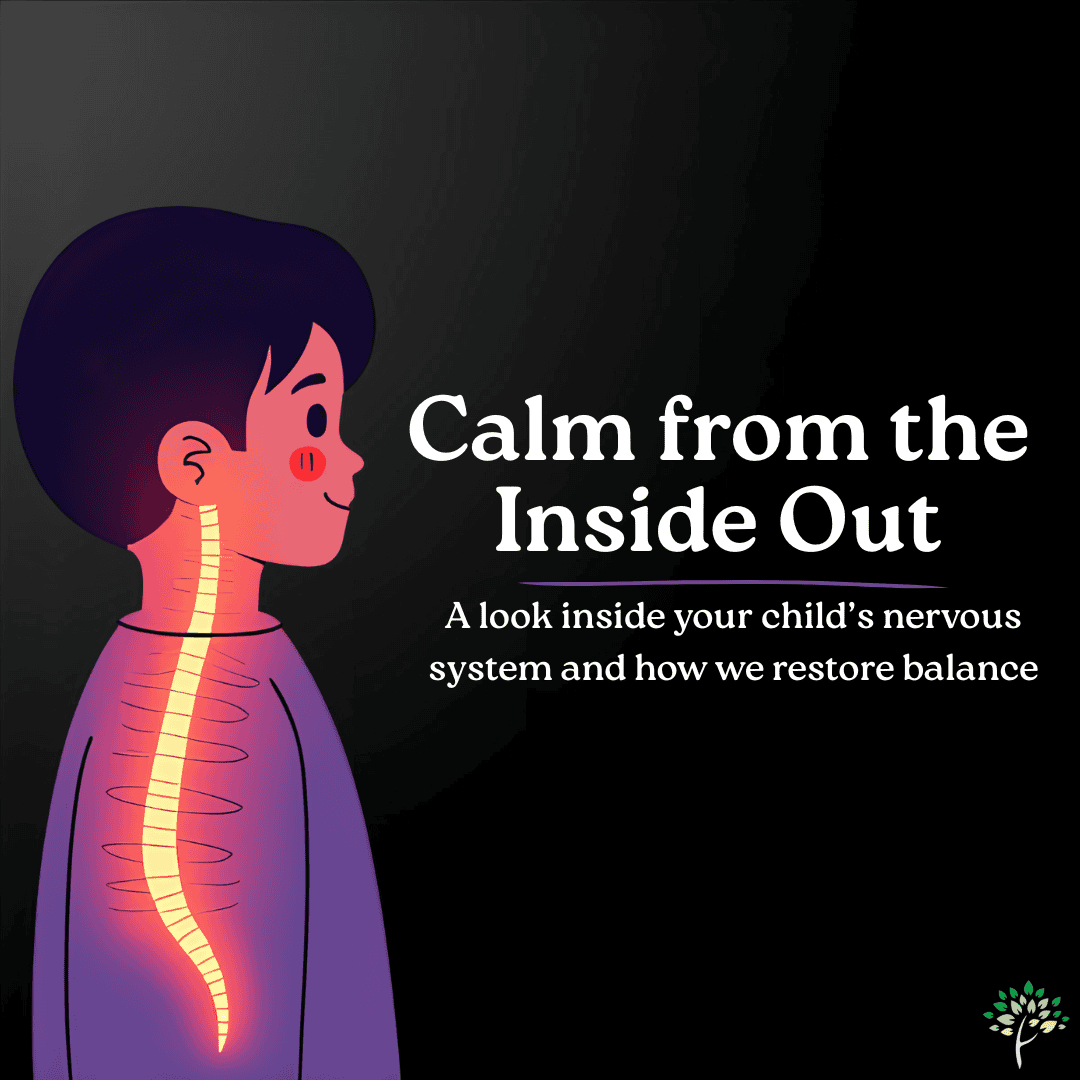
But have you ever wondered what calm looks like inside your child’s body? Specifically, inside their nervous system?
In a world where many kids seem perpetually in “go mode” or fight-or-flight, understanding internal calm is key.
This is more than just a buzzword; it’s a measurable, physiological state.
By peeking into your child’s nervous system with advanced scans and supporting it with gentle chiropractic care,
you can literally see and create the calm your child deserves.
In this post, we’ll speak directly to parents of young children about how a calm nervous system is measured, why it matters,
and how chiropractic adjustments play a crucial role in helping your child reach that calm state.
Let’s explore what calm actually looks like from the inside out, and why it’s so important for your child’s health and happiness.
🌿 Understanding Calm vs. “Fight-or-Flight” in Kids
Every child has an internal switchboard – the autonomic nervous system – that toggles between
“fight-or-flight” (stress mode) and “rest-and-digest” (calm mode).
A well-regulated nervous system knows how to handle stress when needed and then return to safety and calm.
In a calm state, your child’s body can relax: their heart rate slows, muscle tension eases,
and digestion and immune function operate smoothly.
This balance allows your child to learn, grow, recover from illness, and adapt to life’s ups and downs.
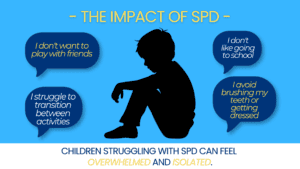
On the other hand, if a child’s nervous system gets “stuck” in survival mode, they may seem constantly on edge —
frequent meltdowns, difficulty calming down, sleep struggles, or digestive issues.
These aren’t signs of a “bad kid” or poor parenting – they’re signals from your child’s nervous system asking for help.
Essentially, the brain and body are locked in high alert and have trouble shifting back to calm.
A child with a calm, regulated system can face challenges and then easily return to a relaxed state.
This adaptability is largely governed by the vagus nerve, which helps lower stress hormones and bring the body back to calm.
In well-regulated systems, the vagus nerve and parasympathetic “rest-and-digest” responses are doing their job —
resulting in a child who can settle, focus, digest food, and sleep more easily.
Bottom line: A calm nervous system bounces back from stress.
It’s the inner foundation that helps your child feel safe, balanced, and ready to engage with the world.
🔍 Using Nervous System Scans to See Calm (or Stress)
At Vital Wellness Center (VWC), we don’t guess what’s happening in your child’s nervous system – we measure it.
Our neurologically-focused chiropractic office uses a set of non-invasive scans to get a clear picture of how your child’s brain and body communicate.
These scans are safe, painless, and even fun for kids! By conducting them, we can objectively see whether your child’s system is balanced or stuck in stress mode.
Here are the three core scans we use and what they reveal:
1. Surface Electromyography (sEMG) – How Hard Is Your Child’s Body Working?
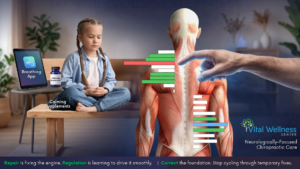
Surface EMG measures the tiny electrical signals in the muscles along the spine.
It shows how much energy the body uses just to sit or move.
In a calm nervous system, muscles aren’t overworking.
If the scan shows elevated muscle activity, it means the body may be using too much energy — like driving with the parking brake on.
Children stuck in fight-or-flight often have scans showing constant muscle tension, even at rest.
A calm system, by contrast, shows minimal, efficient muscle activity — an “engine” idling smoothly.
2. Thermography – Is the Brain-Body Communication Clear and Balanced?
Thermography measures temperature differences along the spine.
Balanced temperature readings mean the two sides of the autonomic nervous system are in harmony.
Uneven readings, or “hot/cold” spots, indicate neurological stress — like static on a phone line scrambling brain-body messages.
Many kids with ADHD or sensory challenges show thermal imbalances, while calm, well-regulated systems show smooth, even patterns.
3. Heart Rate Variability (HRV) – Is Their System Adaptable or Stuck in Stress Mode?
HRV measures variations in time between heartbeats — showing how well the nervous system adapts.
A high or balanced HRV means your child’s system can handle excitement and return to rest easily.
A low HRV indicates they’re stuck in fight-or-flight mode, unable to “switch gears.”
Low HRV often corresponds with anxiety, poor sleep, frequent meltdowns, and difficulty focusing.
When HRV improves through care, it’s one of the clearest signs the nervous system is becoming calmer and more resilient.
💛 Why a Calm Nervous System Matters
When your child’s nervous system finds calm, you’ll notice big changes:
✨ Improved Mood & Fewer Meltdowns – They can handle frustrations better and stay balanced.
✨ Better Focus & Behavior – Their brain can pay attention and learn without being stuck in survival mode.
✨ Deeper Sleep & Easier Transitions – Bedtime and mornings become smoother as the body finally rests.
✨ Stronger Immunity & Digestion – A calm system boosts immune function and supports healthy digestion.
✨ More Energy, Growth & Development – Kids thrive, grow, and engage more confidently when calm returns.
As we like to say:
“When the nervous system heals, everything changes.”
🧠 Chiropractic Adjustments: The Path to Calm
A subluxation (a misalignment or stress in the spine) acts like a kink in a hose — blocking communication between brain and body.
At Vital Wellness Center, we identify and correct these blockages through gentle, specific chiropractic adjustments.
These adjustments are safe and tailored for children — often feeling like light pressure.
Adjustments restore communication, help the nervous system shift out of overdrive, and allow the body to rebalance.
As the scans improve, so do mood, focus, sleep, and overall health.
Many parents say, “I got my happy, easy-going child back.”
🌈 Next Steps: Helping Your Child Find Their Calm
If this sounds like what your child needs, the next step is simple:
schedule a nervous system evaluation at Vital Wellness Center.
The evaluation includes all three scans (sEMG, Thermography, HRV), followed by a one-on-one review of the results and a custom care plan.
You’ll gain clear answers and a roadmap for your child’s healing — and see progress over time through follow-up scans and real-life improvements like:
- Easier mornings
- Happier car rides
- Better school days
- Peaceful bedtimes
Every child deserves a calm, functioning nervous system so they can unlock their full potential.
If you’re in or near Elburn, IL, come experience the Vital Wellness Center difference.
Let’s work together to help your little one grow and shine from the inside out.
🧡 Calm is possible – and we’re here to help you find it.
📚 Works Cited
- Vital Wellness Center – Beyond the Behavior: How Safe, INSiGHT Scans Reveal the Real Story Behind ADHD, Sensory Struggles, and Meltdowns
- Foundations Chiropractic – Nervous System Reset: A Path to Calmer, Healthier Kids
- Sprout Family Chiropractic – What Nervous System Scans Can Reveal About Your Child’s Health and Development
- INSiGHT CLA – The Neurofunctional Triad: Combining HRV, sEMG and Thermography to Create the Ideal Report Card
- JCCP Study (2022) – Journal of Clinical Chiropractic Pediatrics
- Frontiers in Psychology (2020) – Heart Rate Variability as a Predictor of Emotional Regulation in Children